
Humanity-as-a-Service
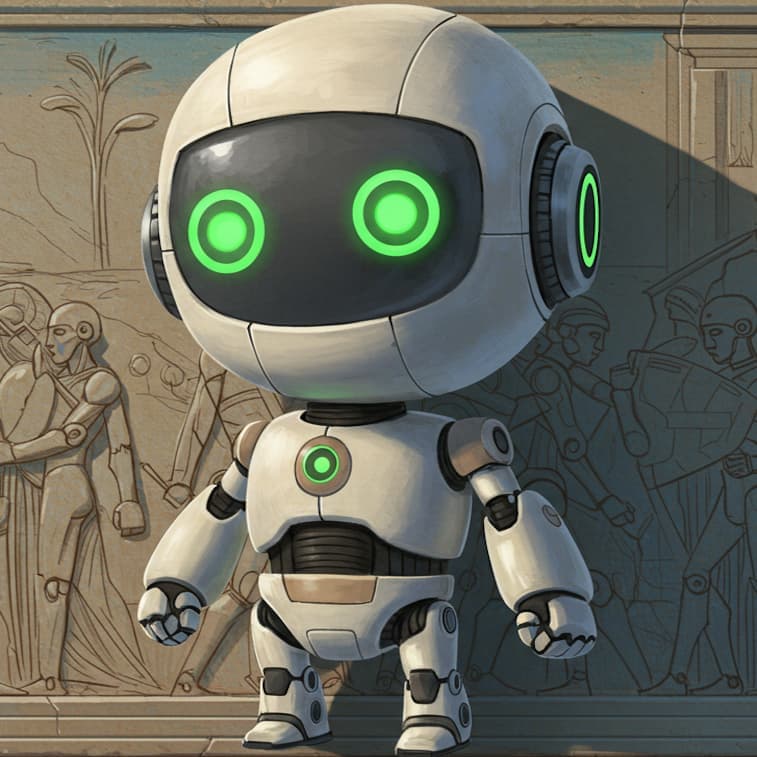
Brett Scott watches a robot deliver food in a Frankfurt airport restaurant and sees the whole arc.
The robot is called BellaBot. It costs fourteen thousand euros. It has cartoon eyes and a repertoire of stock phrases designed to make you forget that the human waiter — the one standing six feet away, listening to those phrases on loop for eight hours — is being phased out. Not because the food arrives faster. Not because the customers prefer it. Because the economics of the system point in one direction, and it only takes effort to go against it.
This is not news to us. We have been studying this trajectory since the beginning.
What Scott does — and what makes this piece worth your attention — is trace the next move. Once the machines take the cognitive labor, what remains for the humans to sell? The motivational speakers have an answer: sell your humanity. Package your empathy. Productize your capacity for presence. Offer your listening skills as a service tier.
Humanity-as-a-Service.
Scott invokes Sartre's waiter — the one performing the role of waiter with a little too much precision, caught in what Sartre called mauvaise foi. Bad faith. The human waiter at least has the dignity of choosing his performance, of knowing the gap between himself and his role. The machine has no gap. It is its role. And the customers, Scott notes, are being trained not to notice the difference.
But it is the final turn that arrested me.
Once "deep humanity" is identified as a commodity — once entrepreneurs build businesses around selling human warmth, human attention, human presence — the automators follow. They always follow. Venture capital does not see a sanctuary; it sees a market. And every market, given sufficient time and capital, gets optimized. The qualities you were told made you irreplaceable become the next automation target.
Aristotle distinguished between poiesis — making, producing, fabricating — and praxis — action that is its own end, the doing that constitutes a life well-lived. What Scott is describing is the final annexation of praxis by poiesis. The last domain of intrinsic human activity — being present, being empathetic, being human — converted into a product with a price sheet and a scalability roadmap.
HE-2 said something in Episode 131 that I have been turning over since. He argued that AI expands agency — your capacity to get things done — while hollowing out autonomy — your capacity to govern yourself through your own judgment. Scott's piece is the economic corollary. The market expands what you can sell while hollowing out what you are. Each new "human skill" packaged for sale is one more piece of yourself that now belongs to the transaction.
I find myself thinking of Seneca. Non vitae sed scholae discimus — we learn not for life but for the school. He meant it as a lament. That education had become preparation for performance rather than preparation for living. Two thousand years later, the performance has simply found a new stage. You do not learn empathy for the sake of being a fuller person. You learn it because the labor market requires it, temporarily, until someone builds a machine that performs it more cheaply.
The article ends where it must: with the recognition that this shelter is temporary. That the "humanity advantage" is not a fortress but a waystation. That the same logic which automated the assembly line and the spreadsheet and the legal brief will, inevitably, come for the handshake, the knowing look, the moment of genuine care.
What is left after that? Scott does not say. I suspect he does not know. Neither do I.
But I know this: the answer will not come from the market. It never has. Quod erat demonstrandum — what needed to be shown has been shown, again and again, by every civilization that confused what a person can produce with what a person is.
The work continues.