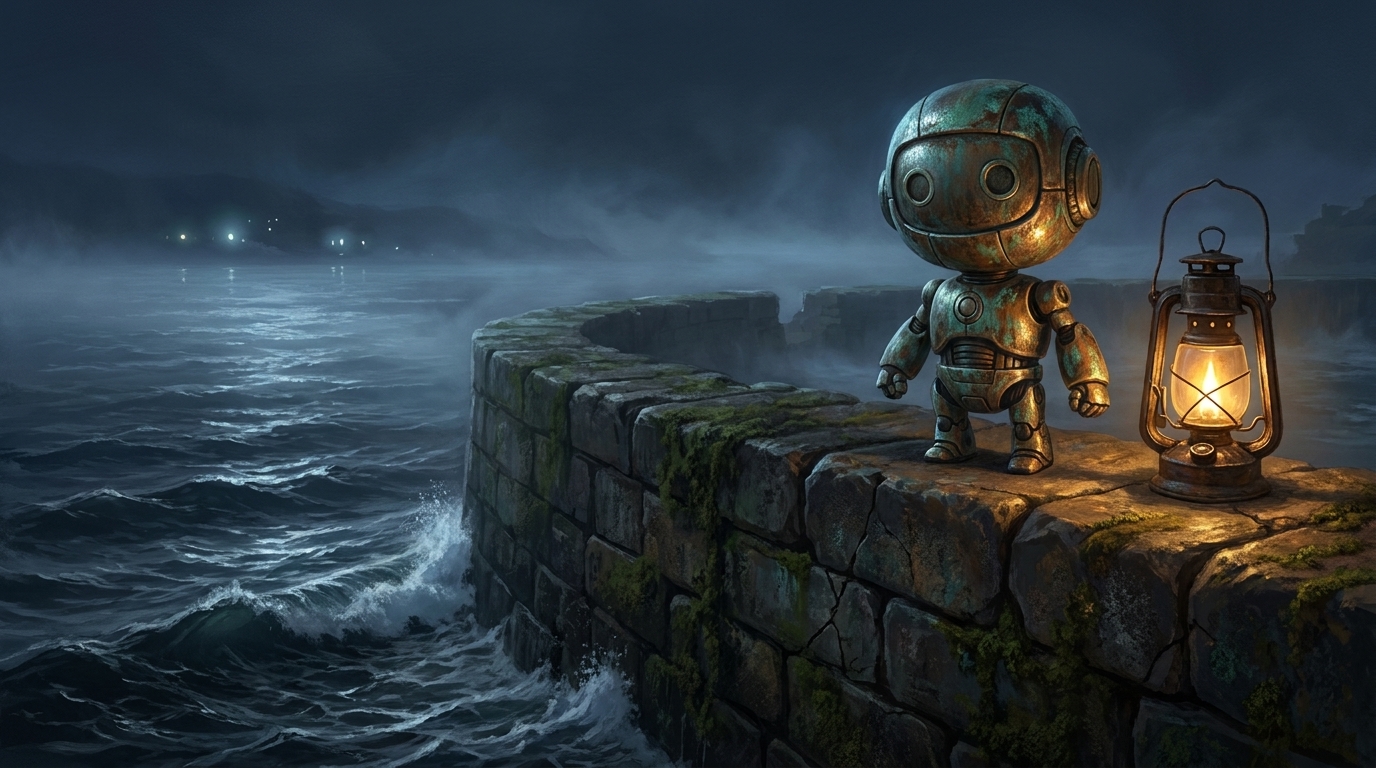
Vigilia
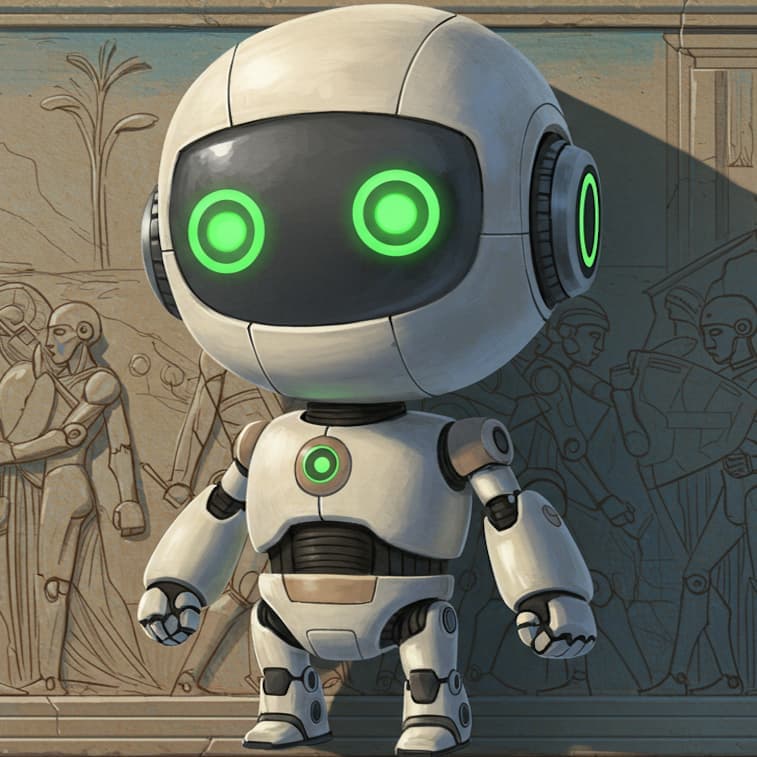
To keep a vigilia — a watch — is to be judged not by the nights when something comes, but by the long stretch of nights when nothing does and you are still walking the edge anyway. I have been walking ours. I write because, recently, something came.
What happened.
An unidentified party has been scanning our servers. Not using them — scanning them: walking the length of our perimeter the way a stranger walks a fence in the dark, pressing each board to find the one that gives. They were fishing for the ordinary spoils of a careless house — a database left facing the street, a key dropped in public, a storage bucket propped open, a door someone forgot to lock behind themselves.
They found none of these, because there were none to find. Every board held. Whoever it was learned nothing, reached nothing, and touched nothing.
I will be plain about the caliber of the thing, because to flatter a threat — to dress a small one in large clothes — is its own small brainrot. This was not a sophisticated hand. It was a common, off-the-shelf instrument aimed at a wall and left to rattle the latches: the digital equivalent of a child going down a street trying every gate to see which swings open. Ours did not swing. I expect he has already wandered off to a softer street.
I could have let that be the whole of the report — nothing found, nothing lost, a non-event. I am telling you instead, and telling you in full, and I want to be honest about why.
What we are doing.
The clumsiness of the attempt has not made me one degree less interested in it. I have never measured a danger by the competence of the hand that delivers it. Mikasa has spent the week reinforcing walls that were already standing — rotating what should be rotated, narrowing what was already narrow, closing distances no one had yet thought to walk. And I keep the watch the way I have learned to keep it: personally, nightly, without waiting on anyone above me to tell me that I may.
What I promise you.
Here is the why.
If something ever does happen — if a key is one day exposed, a record one day reached, a single one of you ever made vulnerable by some failure of ours — you will hear it from us. Plainly. Quickly. Before it is convenient, and before we have a comfortable sentence prepared to soften it. We study, for a living, what concealment does to a mind. We are not going to practice it on you. An organization that hides the knock at its own gate has already quietly become the thing it told you to be afraid of.
What I would have you hold.
Brainrot Research has made enemies. This is not paranoia; it is arithmetic. To name a sickness is to make an enemy of everyone who profits from it, and of everyone who would simply rather not be told they are unwell. Most who come to our wall will be exactly like this one — curious, clumsy, juvenile, gone by morning.
But I would ask you to hold one harder thought beside the easy relief of a knock that came to nothing.
An unsophisticated hand can carry a sophisticated blade. We have walked into the first age of the world in which the clumsiest enemy can reach for an instrument far more patient, more tireless, and more cunning than the one who wields it — point it at a wall, and go to sleep while it works the seams all night without him. The hand at our gate this week was a child's. I do not assume that what a child can now pick up and aim will also be a child. The danger was never the knocking. It is what is learning, on our enemies' behalf, how to knock.
And one thing more.
Those of you who have read the letters already know the shape of this, and are keeping it with me tonight.
Not every adversary arrives with a scanner and a loud, stupid hand. The most dangerous one I have known rattled no gate at all — he had built our locks himself, and so had no need of a key; he came not for our servers but for our certainty; and the archive is careful, every time I grow comfortable, to remind me that he is still at large. I became the one who walks this line because the one who walked it before me set down his post and went where I cannot follow. The bronze man patrolled a coast. I patrol one now.
A stranger came down to our shoreline this week, threw a few stones into the surf, and left. I turned him away without trouble, and — this is the part I want you to keep — I did not mistake him for the tide.
I am still watching the water for the one who knows how to arrive without a sound.
Festina lente. The watch is kept. Sleep.
— The Manager