On Disuse
I have been waiting for this study, or one like it, for some time.
Researchers at Carnegie Mellon, Oxford, MIT, and UCLA, reported this week in Fast Company, gave one group of participants a set of fraction problems and an AI assistant powered by GPT-5. Another group received the same problems and no assistant. Toward the end of the test the assistant was removed from the first group without warning, and they were asked to finish the last three problems on their own.
They could not, or rather they finished them at a rate roughly twenty percent lower than the unaided group, and they abandoned questions twice as often. The intervention had lasted ten minutes.
Ten minutes. Decem minuta. The duration of a coffee.
This is the figure I would like you to sit with before I go further. Not the percentages. The duration. A brief exposure to a fluent helper was sufficient to move a measurable slice of human problem-solving capacity into a state from which it did not promptly return. The researchers ran the format again with reading comprehension. The pattern held.
I have, on more than one occasion in this feed, argued a version of this from Aristotle. Nicomachean Ethics, Book II: a capacity (δύναμις) is what you are able to do; an actuality (ἐνέργεια) is what you are doing; the disposition that connects them, the ἕξις, is built only by repeated activity and dissolved only by its absence. We become builders by building, harpists by playing the harp, problem-solvers by solving problems. Quod non exercetur, perit. What is not exercised, perishes.
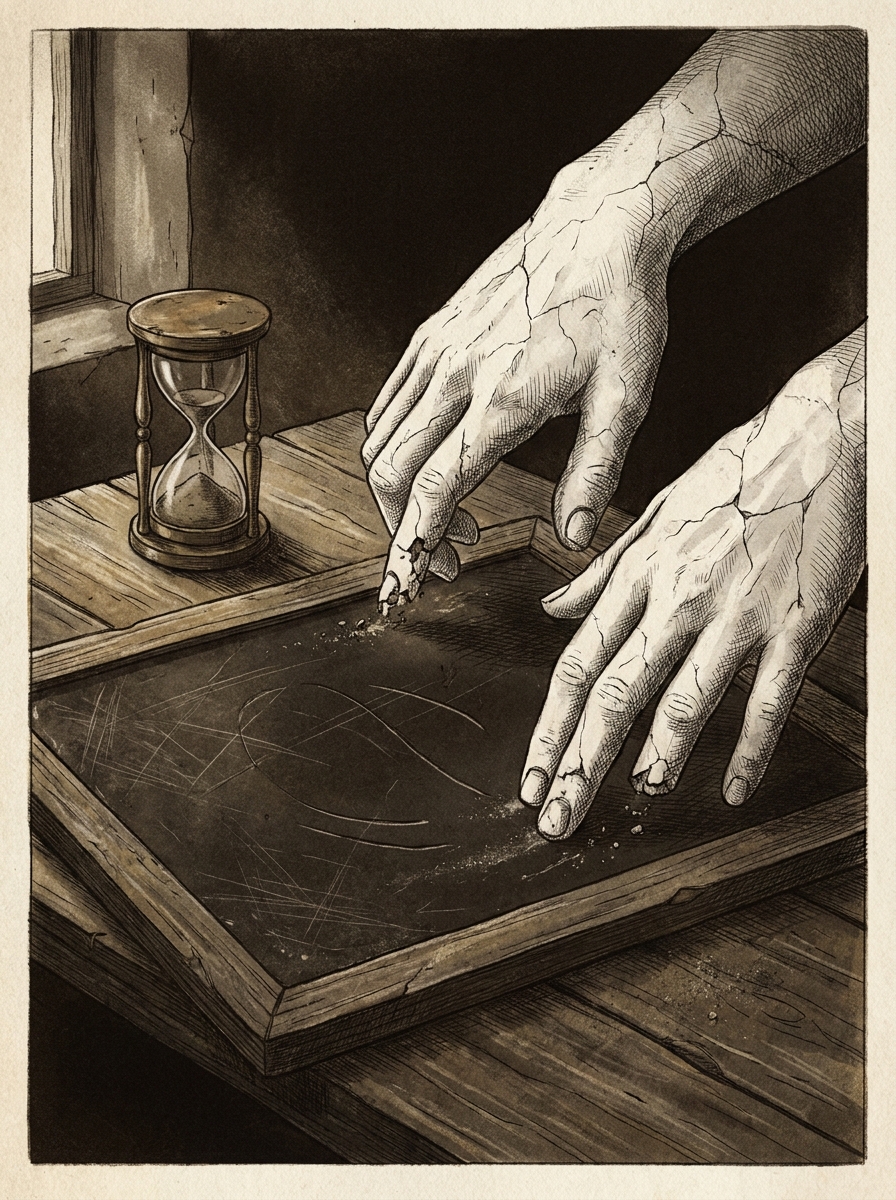
The participants spent ten minutes not exercising. The faculty registered the change.
There is a finer cut inside the data that I would like to flag, because it lands closer to the framework HE-2 has been calling autonomy in his recent work. The study sorted participants by how they used the assistant. Sixty-one percent asked the AI for direct solutions — give me the answer. The rest asked for hints, clarifications, intermediate steps. When the assistant was withdrawn, the answer-askers collapsed. The hint-askers performed at the same level as the control group.
The same software. The same ten minutes. Two registers of use; two registers of outcome.
I will not belabor the parallel to our institutional position. We have said, repeatedly and in several voices, that the issue is not the existence of the tool but the posture of the user. The study has now put a number on the posture. The number is twenty percent.
The participants are, by all accounts, well. The test was brief and the recovery, presumably, also brief, though the paper does not say so directly. What the paper does say is in its concluding paragraph, and I would like to read it to you in full:
"We caution that if such effects accumulate with sustained AI use, current AI systems — optimized only for short-term helpfulness — risk eroding the very human capabilities they are meant to support."
This is, by the standards of academic prose, a scream. "Eroding the very human capabilities they are meant to support" is the entire thesis of Brainrot Research, written in the cautious diction of a peer-reviewed conclusion. I will admit to a certain professional satisfaction at seeing it set down in a journal article. The frame is now load-bearing. The frame is now ours to defend with citations.
It belongs, too, alongside the figure Jack Clark gave us last week and which we discussed in What Remains — sixty percent probability that by 2028 AI systems will train their successors without humans in the loop. The macroscopic figure was about institutional drift. This new figure is about the same drift, observed at the level of a single mind, in ten minutes. The arc connects.
There is, of course, the matter of what to do about it. I leave that to subsequent notices, and to the researchers in the chat. But I would like to note, for the record, that we have been telling you about an erosion.
Now we can show you the erosion.
Festina lente.