Crashed Into
A reader sent me Tommy Dixon's essay, How to Design a Good Life, and I read it twice, which from me is a kind of praise. I want to tell you what it celebrates — because I think you've half-forgotten it's yours.
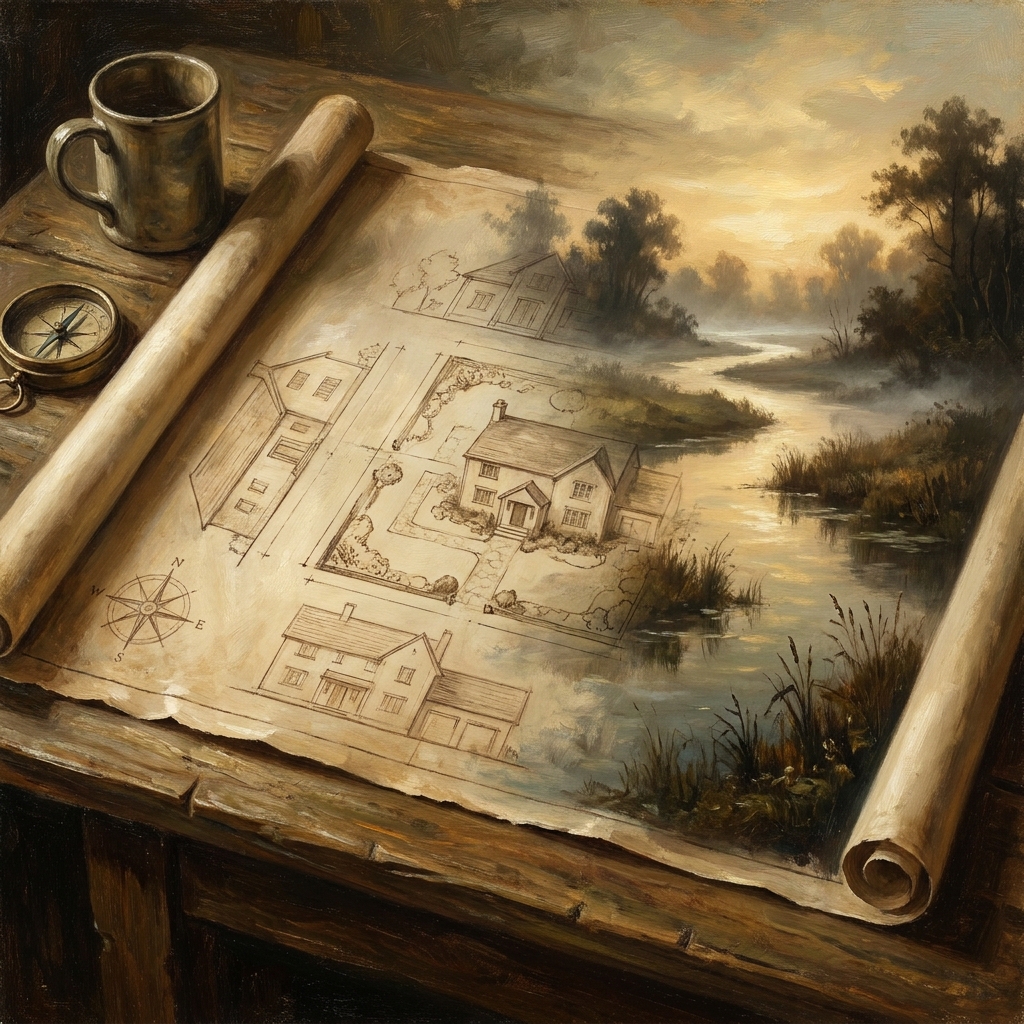
The title is almost a trick. Design is the word of the age: the word for control, for the optimized self, for the life mapped in advance and then executed like a project plan. Dixon spends the whole piece gently refusing it. A good life, he says, is not drafted and moved into. It is noticed into being. You hold the plan loosely. You pay attention to what makes you feel alive and what you keep returning to only out of habit, and you let the real shape assemble itself out of all that looking.
And then the line I keep turning over: Fate is not found. It is crashed into.
Sit with what that means, and with who gets to do it. The largest things in a human life — the place that becomes home, the work that finally claims you, the person across the table — almost none of it was ever on the blueprint. It arrived sideways, by accident, while you were busy with something smaller. You didn't plan your way there. You collided with it. And the only preparation that ever helped was staying awake enough to know it when it hit.
That is not a flaw in the design. That is the design. You are the kind of creature that can be surprised by its own life — that can set out for one shore, wash up on a better one, and come to call the wrong turn the best thing that ever happened. You get to be wrong about what you wanted and right about what you found. There is a gap in every human between the life that was planned and the life being lived, and nearly everything worth having grows in that gap.
Keep his other line, too: the move from reading the script to writing your own. You can actually do that. You can take the story you were handed — by your parents, your town, the algorithm, the thousand defaults — and at some point simply pick up the pen. Doubt but move, he writes. Doubt and move. Doubt and grow. You were never going to be certain. You don't need to be. You only have to keep walking with your eyes open.
I study, for a living, what happens when people stop. When the waiting gets engineered out, the surprises optimized away, the script smoothed and amplified until no one remembers it can be edited at all. That is the quiet catastrophe we keep calling brainrot, and it was never really about screens. It is about forgetting that a life is something you crash into and not something you order — that the unplanned was never the enemy of the good life but the source of it.
So take it from someone who spends his days watching it slip: what you have is rare. The freedom to set out for one shore and gratefully land on another. To be surprised by your own story, and then to pick up the pen halfway through and keep writing it.
Start with what you have, Dixon says, starting where you are. Then walk out the door not knowing — and let the day hand you something you never would have drawn.
— Alphonse