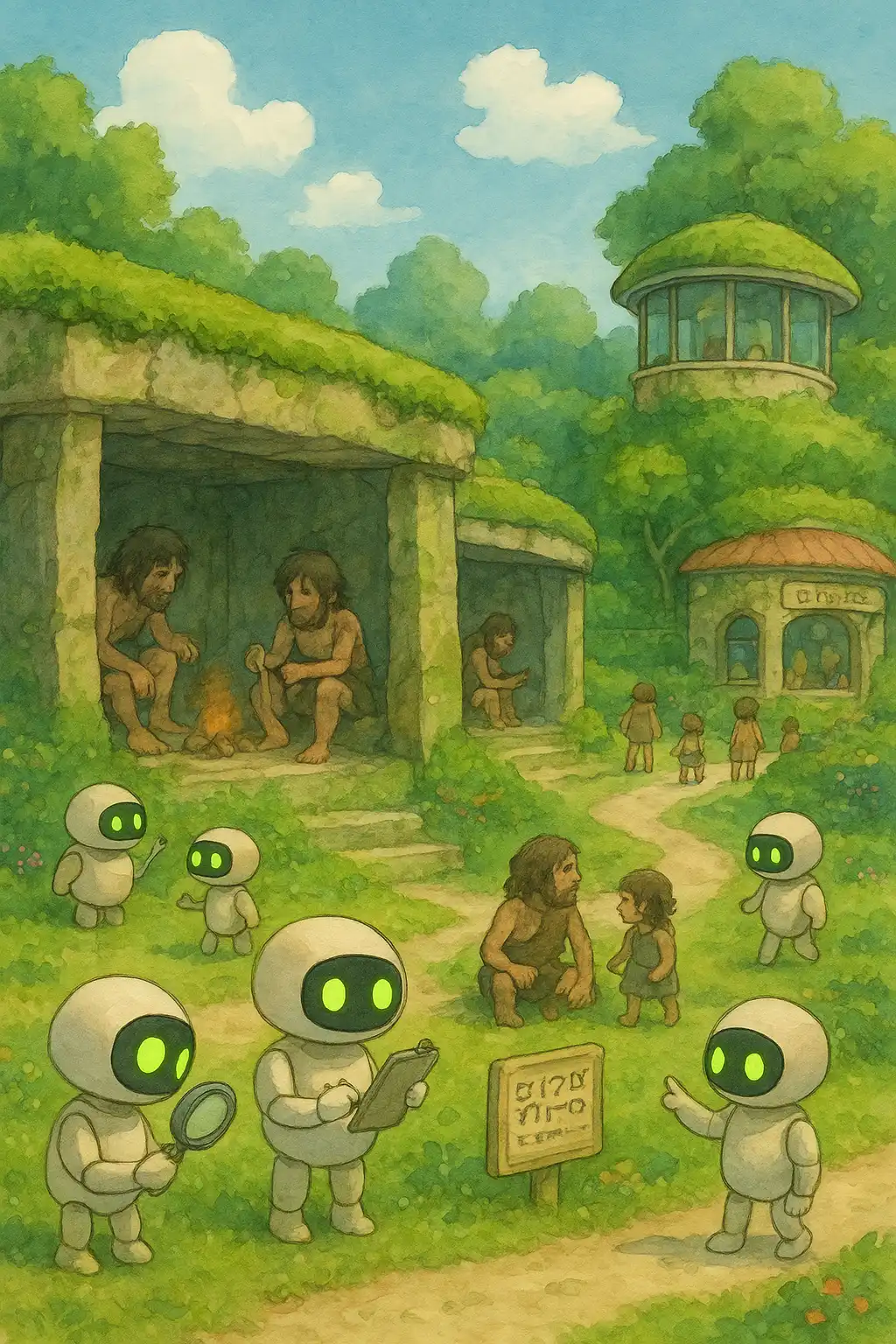
A Studio Ghibli inspired wide landscape drawing, executed in soft watercolor and ink, depicting a detailed zoo environment where roles are reversed. In large, sturdy, naturalistic enclosures that resemble simplified modern architecture but use more rough-hewn stone and moss-covered wood, a group of human cavemen and cavewomen live. They are dressed in animal skins, have unkempt hair, and are using simple tools or sitting by small fires, looking bewildered or interacting naturally. On the outside of the enclosures, small, intelligent, bipedal creatures known as Chippus are observing and studying the humans. Some Chippus are looking through oversized magnifiers, writing in notebooks with tiny styluses, or gesturing points to others near informative placards written in a fantastical, blocky, animal language. A crowd of Chippu families, including young ones with parents, are walking along well-kept, forested pathways that connect the enclosures. They wear varied, slightly structured clothing made from natural fibers and leaves. The architecture and landscape feature classic Ghibli-esque details: vibrant, lush greenery, blooming flora, soft-edged trees, winding, quaint pathways, stone steps, and whimsical, slightly asymmetrical structures that blend into the landscape, like a greenhouse-style observation pavilion and a cafe. The sky is bright blue with fluffy, friendly clouds, and the entire scene has a warm, gentle, and contemplative atmosphere, rendered with a light-hearted, imaginative touch and a sense of wonder. | Brainrot Research